


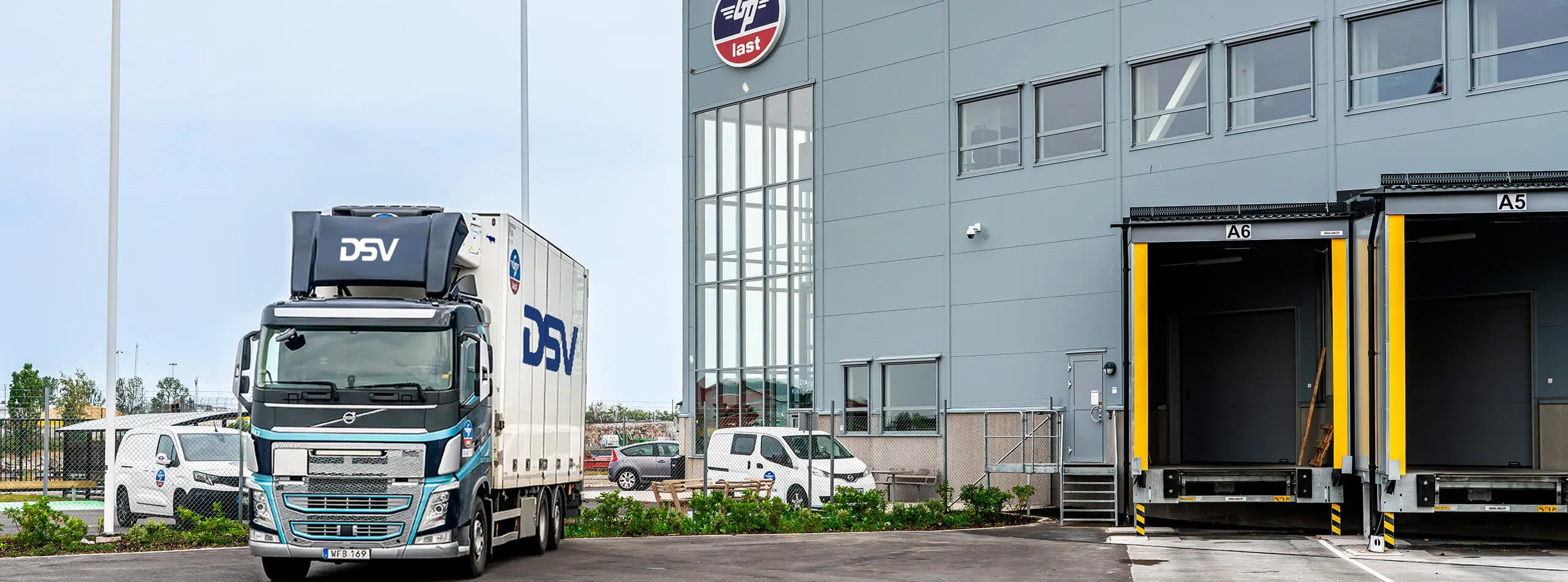
The logistics industry accounts for a significant portion of Sweden’s total carbon dioxide emissions. As a result, an increasing number of companies are requiring their logistics partners to deliver not only efficiency and cost control—but also documented environmental initiatives.GP Last has long been actively working to integrate sustainability into every aspect of its operations, from warehousing to the last mile.
What is sustainable logistics?
Sustainable logistics means optimizing the entire flow of goods—from supplier to end customer—in a way that minimizes negative environmental impact. It involves reducing emissions, using renewable energy, minimizing unnecessary transport, and choosing packaging materials with a low climate impact. A sustainable logistics solution takes three dimensions into account: environmental sustainability (emissions and resource consumption), social sustainability (working conditions and traffic safety), and economic sustainability (long-term cost-effectiveness). For e-commerce companies and the manufacturing industry, choosing a logistics partner is one of the most effective measures for reducing the overall climate footprint of their operations.
GP LastOur sustainability work in practice
GP Lastworks systematically with sustainability in four areas:
1. Energy-efficient warehouses
Our warehouse facilities are equipped with motion-activated LED lighting, energy-efficient heating, and solar panels. Energy consumption per pallet handled has decreased gradually thanks to ongoing investments in building optimization and equipment.
2. Optimized transport routes
Through advanced route optimization, we reduce empty runs and unnecessary transport distances. Each optimized route results in lower fuel consumption, fewer emissions, and shorter delivery times for customers. We collaborate with carriers who are actively working to transition their vehicle fleets to renewable fuels.
3. Environmentally certified partners
GP LastWe require our subcontractors and transport partners to meet defined environmental standards. We prioritize partners with ISO 14001 certification or equivalent environmental management systems.
4. Climate reporting and transparency
We offer customers the opportunity to have their logistics flows mapped from a climate perspective. Transparency and measurability are prerequisites for continuous improvement—both for us and for the companies we serve.
Why choose a sustainable logistics partner?
Sustainability has evolved from a preference to a requirement—from customers, investors, and regulators. The EU’s CSRD directive means that more and more companies must report emissions across the entire value chain, including logistics. Choosing a logistics partner with documented sustainability efforts is therefore not just an ethical stance—it is a business necessity.
Sustainable logistics systems – an investment with a double return
Sustainable logistics systems deliver more than just environmental benefits. Energy efficiency, optimized routes, and reduced waste directly result in lower operating costs. Companies that choose sustainable solutions consistently report improved cost control alongside reduced environmental impact.GP Last offers customized 3PL solutions where sustainability is an integral part of the setup and follow-up—not a separate add-on.
Next Steps
Want to know howGP Last can help your business achieve your sustainability goals without compromising on delivery capabilities or cost control? Contact us for a no-obligation conversation.
Learn more about our 3PL solutions →